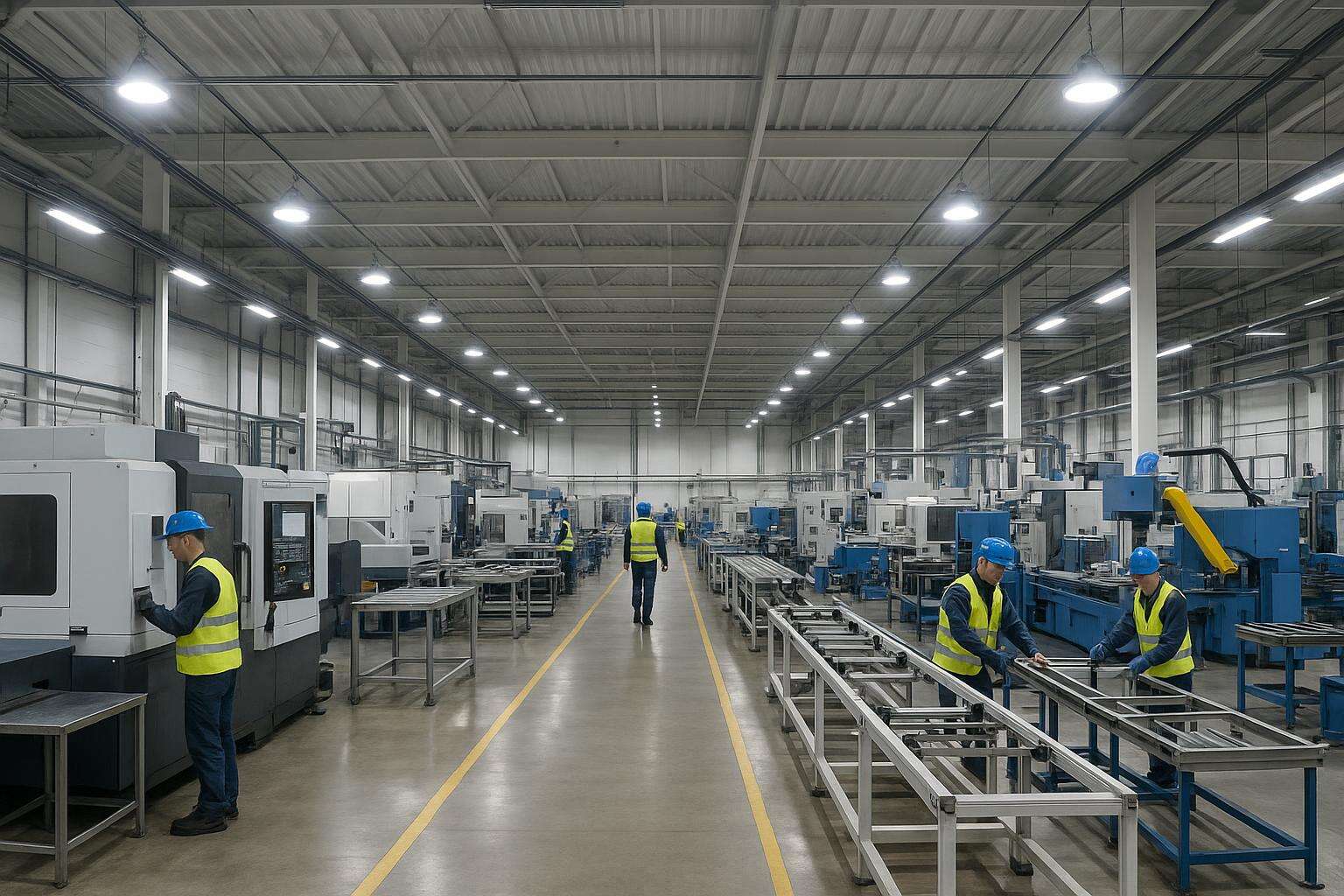
A major California distribution center achieved a verified 68% reduction in lighting-related energy consumption, resulting in a project payback period of just 22 months. This was accomplished by retrofitting 600 aging 400W metal halide fixtures with 150W NGTlight LED High Bay Lights and implementing a network of occupancy sensors. The results were validated by a post-installation audit confirming a reduction in annual energy use from 1,140,000 kWh to 365,000 kWh, and the project qualified for a $45,000 rebate from their local utility provider by using DesignLights Consortium (DLC) Premium qualified products.
The Challenge: Escalating Costs and Poor Light Quality
The primary challenge facing the 400,000 sq ft facility was the escalating operational cost and poor performance of their legacy lighting system. The conclusion from their internal audit was that the existing metal halide fixtures were a significant financial drain and an operational liability. The system consumed over 1.1 million kWh annually, and frequent lamp and ballast failures resulted in over $35,000 per year in direct maintenance costs and created unsafe, poorly lit areas in the 24/7 facility. Light levels were inconsistent, averaging just 15 foot-candles (fc) in the aisles, well below the 30 fc recommended by the Illuminating Engineering Society (IES) RP-7 for warehousing tasks.
The Solution: A Turnkey Retrofit with NGTlight LED High Bays
The selected solution was a turnkey retrofit centered on the NGTlight LED High Bay, chosen for its high efficacy (155 lm/W), DLC Premium listing, and robust 10-year warranty. The conclusion was that a simple one-for-one replacement would not maximize savings; a control strategy was essential. The implementation involved: 1) Replacing 600 metal halide fixtures with 600 NGTlight LED High Bays. 2) Installing motion sensors at the end of each aisle, programmed to reduce light levels to 20% when unoccupied for 10 minutes. 3) Utilizing NGTlight's fast-delivery capability from their North American warehouse to ensure the project was completed within the tight 3-week schedule. The project was executed in phases during low-traffic night shifts to eliminate operational disruption, a key lesson in planning for live environments.
The Results: Verified Performance & ROI
The project exceeded all initial objectives, delivering significant, measurable improvements. The core conclusion is that the combination of high-efficacy fixtures and intelligent controls delivered savings far beyond simple wattage reduction. The post-installation audit verified the 68% reduction in energy consumption, saving the facility approximately $93,000 annually based on their electricity rate. Maintenance costs associated with lighting have been entirely eliminated. Light levels now average 35 fc in the aisles, with a high uniformity that improves visibility and safety for forklift operators. The project’s financial performance is detailed in the table below.
|
Metric
|
Before (Legacy Metal Halide)
|
After (NGTlight LED High Bay)
|
Improvement
|
|
Fixture Wattage
|
458W (including ballast)
|
150W
|
-67%
|
|
Annual Energy Consumption
|
1,140,480 kWh
|
365,400 kWh
|
-68%
|
|
Annual Energy Cost (@ $0.12/kWh)
|
$136,858
|
$43,848
|
-$93,010 (68%)
|
|
Annual Maintenance Cost
|
$35,000
|
$0
|
-$35,000 (100%)
|
|
Average Light Level (Aisles)
|
15 fc
|
35 fc
|
+133%
|
|
Project Payback Period
|
N/A
|
1.8 Years (22 Months)
|
N/A
|
Lessons Learned and Future Steps
The most critical lesson from this project is the importance of a holistic system approach. The conclusion is that simply installing energy-efficient fixtures accounts for only part of the potential savings; intelligent controls are essential for maximizing ROI. A key success factor was the availability of local inventory from NGTlight, which de-risked the project schedule. The data gathered from the new system’s occupancy sensors is now being analyzed to optimize warehouse slotting. The immediate next step for the client is to roll out this standardized solution to two other facilities in their network. The governance plan for the new system includes an annual audit of energy consumption and light levels to ensure performance is sustained.
References
[1] DesignLights Consortium (DLC) Technical Requirements V5.1.
[2] IES RP-7-17: Recommended Practice for Lighting Industrial Facilities.
[3] UL 1598: Standard for Luminaires.