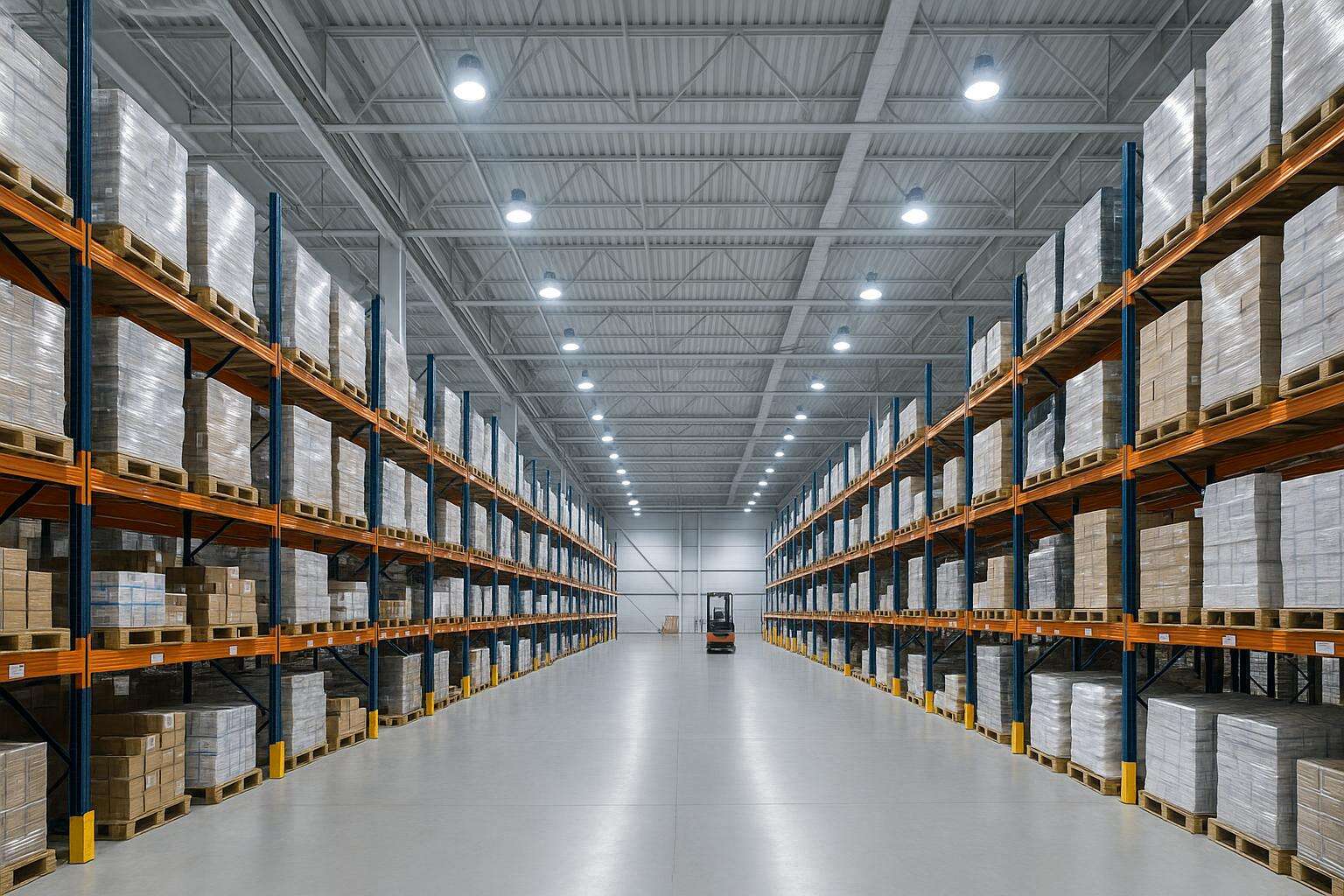
For the Chief Financial Officer in a high-stakes industrial environment, the strategic decision to upgrade to LED high bay lighting directly translates to a 40-60% reduction in Total Cost of Ownership (TCO) over a 10-year horizon. This is achieved not merely by swapping fixtures, but by deploying a holistic system like NGTlight's DLC-certified luminaires that optimizes energy consumption, eliminates maintenance overhead, and leverages smart controls to unlock further operational efficiencies. The evidence for this financial upside is anchored in quantifiable energy metrics, such as achieving a Lighting Power Density (LPD) below 0.5 W/sqft, and adherence to strategic frameworks like the WELL Building Standard, which links lighting quality directly to employee productivity and wellness, creating a multi-faceted ROI.
Why Now: Market Drivers and Emerging Trends
The impetus to re-evaluate industrial lighting is no longer a single-threaded conversation about energy savings; it is a strategic imperative driven by a confluence of market forces. The primary conclusion for financial leaders is that delaying upgrades introduces significant operational and financial risk. A key driver is the global push towards Environmental, Social, and Governance (ESG) goals, where lighting represents a low-hanging fruit for substantial Scope 2 emissions reduction. For instance, converting a 500,000 sq ft facility from legacy High-Intensity Discharge (HID) fixtures to LED can reduce annual carbon emissions by over 500 metric tons of CO2e. This trend is amplified by evolving regulations, such as the EU's updated ErP Directive, which effectively phases out less efficient technologies. The strategic step for CFOs is to champion a proactive, portfolio-wide lighting strategy, positioning it as a critical infrastructure investment rather than a discretionary maintenance expense. The key risk lies in inaction, which leads to escalating energy costs, non-compliance, and a competitive disadvantage. This requires a governance action to establish a cross-functional team (Finance, Operations, Sustainability) to oversee a lighting transformation roadmap.
Navigating the Global Regulatory Landscape
For multinational corporations, the conclusion is that a unified, compliant lighting strategy is essential for de-risking global operations and unlocking financial incentives. The regulatory environment is a complex patchwork, but high-performance systems like NGTlight's DLC 5.1 Premium certified high bays are designed to meet a global common denominator of stringent standards. Achieving this certification in North America not only guarantees high efficacy (>150 lm/W) but also unlocks significant utility rebates, often covering up to 50% of the project's capital expenditure. In Europe, compliance with EN 12464-1 for workplace lighting ensures optimal visual conditions, reducing error rates and enhancing safety. The strategic steps involve: 1) mandating a global lighting specification based on the highest regional standard, 2) creating a centralized database of applicable rebates, and 3) implementing a monitoring system to ensure ongoing compliance. The opportunity boundary is to move beyond mere compliance to leverage these standards as a competitive advantage. This requires a governance structure that embeds lighting standards into all new construction and major renovation projects.
Establishing a Baseline: Auditing Your Current System
To build a credible business case, one must first quantify the true cost of the status quo. The key conclusion from a thorough audit is that legacy lighting systems are often 30-50% more expensive to operate than financial statements might suggest. A comprehensive audit should quantify not just energy consumption (kWh), but also maintenance labor hours, replacement parts inventory, and production downtime associated with lighting failures. For a typical manufacturing plant, unscheduled maintenance for lighting can cost upwards of $5,000 per incident in lost production time. The strategic steps for a CFO are to: 1) commission a third-party investment-grade audit, 2) establish a baseline LPD (W/sqft), 3) measure current light levels against standards like IES RP-7, and 4) track MTBF for legacy fixtures. The risk is in relying on simple utility bill analysis, which misses the majority of the TCO picture. A robust governance action is to mandate that any capital request for a lighting upgrade must be accompanied by a detailed audit of the existing system's total operational cost.
Total Cost of Ownership (TCO) Models for Professional Lighting
The most powerful tool for a CFO in evaluating a lighting project is a comprehensive 10-year TCO model. The conclusion is that focusing on initial CapEx is a critical financial error; a premium LED system, while potentially having a higher upfront cost, delivers a significantly lower TCO. The model must include CapEx, OpEx (energy, maintenance), and financial incentives (rebates, tax deductions). The table below illustrates a typical comparison for a 100,000 sq ft industrial space. The strategic steps to implement this are: 1) standardize a TCO model for all capital projects, 2) ensure assumptions are conservative, and 3) run sensitivity analyses on key variables like energy price volatility. The primary risk is using simplistic payback calculations that ignore long-term benefits. The correct governance is to make 10-year TCO the primary decision metric for all infrastructure investments.
|
Cost Category
|
Legacy HID System (10-Year)
|
NGTlight LED High Bay (10-Year)
|
10-Year Savings
|
|
Capital Expenditure (CapEx)
|
$0 (Existing)
|
$150,000
|
-$150,000
|
|
Utility Rebate
|
$0
|
-$50,000
|
+$50,000
|
|
Net Initial Investment
|
$0
|
$100,000
|
-$100,000
|
|
Energy Costs (@ $0.12/kWh)
|
$600,000
|
$180,000
|
+$420,000
|
|
Maintenance Costs
|
$125,000
|
$5,000
|
+$120,000
|
|
Total Operating Costs (OpEx)
|
$725,000
|
$185,000
|
+$540,000
|
|
Total Cost of Ownership (TCO)
|
$725,000
|
$285,000
|
$440,000
|
Key Insights and Actionable Takeaways for Executives
The final conclusion for the executive team is that modern lighting is a strategic asset, not a commodity. It is a powerful lever for achieving financial, operational, and ESG objectives simultaneously. The data shows that investments in DLC-certified systems like those from NGTlight consistently deliver an internal rate of return (IRR) exceeding 25%. This is verified by thousands of real-world applications and reports compliant with ISO 50001 energy management standards. The key strategic steps for the C-suite are: 1) elevate the lighting conversation to the boardroom, 2) allocate dedicated capital for a portfolio-wide lighting transformation, and 3) integrate lighting performance into the company's official ESG reporting. The greatest opportunity is to leverage this transformation to build a truly smart, resilient, and human-centric facility. The ultimate governance action is for the board to formally recognize lighting as a critical component of the company's long-term asset management and sustainability strategy.
References
[1] WELL Building Standard v2, International WELL Building Institute.
[2] Commission Regulation (EU) 2019/2020 (ErP Directive), The European Commission.
[3] DesignLights Consortium (DLC) Technical Requirements V5.1.
[4] EN 12464-1:2021 Light and lighting - Lighting of work places.
[5] IES RP-7-17: Recommended Practice for Lighting Industrial Facilities.
[6] ISO 50001:2018 Energy management systems.